Interested? Talk to us now.
Get in touch to discuss how we could help streamline, enhance or transform your business.
Contact us
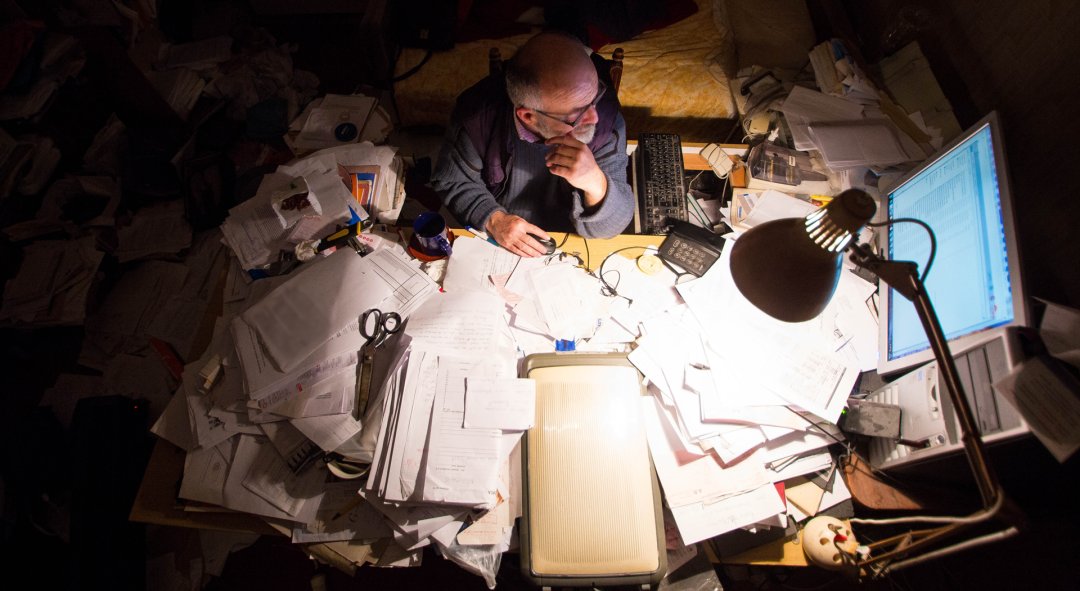
If you run an SME, you may assume you can’t afford a business software system. And if you’re thinking of an Enterprise Resource Planning system (ERP) such as SAP or Oracle, you’re probably right. But today there are business software systems available that SMEs certainly can afford.
Affordability isn’t the real issue. The real issue is understanding the value these systems can bring. Today a business software system is no longer a luxury, it’s a necessity.
The landscape of work is changing fast. Improving operational efficiency is critical for controlling costs, managing quality and satisfying your customers, and digital transformation is the key.
You already use software tools – from basics like Excel and email to accounting software and sales platforms. You may also use industry-specific software for your operations. That’s all great, but what’s missing is a centralised system that ties it all together – and fills in the gaps where you’re still relying on slow manual processes.
Think of your existing software tools as a set of brains. They’re each useful in their own area, but they’re isolated. They can’t communicate. If you connect these brains up via a central nervous system, suddenly you have a superbrain that runs right across your business, from initial enquiry to invoicing, optimising every part of your workflow and revealing insights across your teams. This changes everything.
All your key information is held in one place, from customer records and order details to job status and stock levels. Critically, this cuts out the endless inefficiencies and miscommunications, and offers access to new insights.
When you need to know something, you no longer have to ask someone else. You just look for yourself. At a stroke this removes so many delays and irritations across the business. It also gives you tools to monitor performance, spot emerging delays and issues, and manage your business better.
Manual tasks and repetitive work are eliminated, with new opportunities for automated billing, alerts and workflow triggers. Now you can grow without necessarily having to grow your workforce.
Data is only entered once, greatly reducing the scope for error. Your teams have quick access to data, and automatic data integrity reporting makes it less likely that issues are missed or ignored.
With customer data easily viewable, your sales and customer service teams can deliver a more accurate, informed response to customers. Orders are likely to be delivered on time and to brief.
A business software system doesn’t necessarily need to replace your existing software, it can tie it all together. Now, your sales software can send information to your accounting software, and your operations system can communicate with your warehouse management system.
As you grow, the system grows with your business. You can add new users or locations seamlessly. You can also add new functions, as and when business need arises. You may still be using spreadsheets for managing stock, for example. Now you can add a stock management module to automate restocking.
The savings and benefits continue to accrue, month after month and year after year: smoother workflow, reduced errors, optimised workflow and inventory, far more efficient operations. The system will quickly pay for itself.
Ultimately, a business software system like this – an ERP for SMEs – is a tool to optimise your business. Not as a one-off hit, but as an ongoing process. You can see where the bottlenecks are, where your costs spike, which areas of the business are most and least productive, who your best kinds of customers are so you can refocus your marketing, and what the trends are.
True, the costs of an ERP like SAP are stratospheric, starting at perhaps £500 per month per user. £60,000 a year for a team of 10.
But what about an ERP for SMEs such as Zoho? These typically cost from around £40 per user per month. Not too bad. If you have 10 users you’re looking at an annual cost of around £5000. But that’s the cost of basic functionality, before it actually does what you need it to do. For it actually to be useful, the cost per user could exceed £100 per month, so for 10 users you’re spending £12k a year. And you have to keep on paying that £12k, year after year.
At Decent Group we take a different approach. We build you a business system and charge you once for that. The cost for a basic system starts at around £15k – whether you have 10 users or 100. The main payment is a one-off, in addition to modest ongoing maintenance and licencing costs, but the benefits build year on year. This way, your system is an investment rather than an ongoing drag on profitability.
One problem with the business software solutions available to smaller businesses is inflexibility. You buy a suite of features and tools and you force your business to fit them. Sure, you can turn features on and off and customise layouts and fields, or you can add new modules, but they’re not tailored to your ways of working.
A bespoke system is what you need. In the world of ERPs, however, true bespoke systems are extremely expensive. But in the world of Decent Group, every system is tailored to the unique way you work.
For example, if your inventory is highly complex, we’ll design a stock management module that has all the variables you require. If you use industry-specific software, we’ll integrate the system with it. Or, if you have teams operating remotely and recording a very specific set of data, we’ll build you a bespoke iPad system that guides them through the process.
Let’s sum up: business software systems are now key business tools, and today even bespoke systems — built in line with your needs and your budget — are within reach of small businesses.


Fill in your details and give us an idea of what you’d like to talk to us about, and we will contact you shortly.